
Biodynamic Therapy and the Environmental Crisis
In the middle of an environmental crisis, it can seem a little self indulgent to be exploring a client’s breathing, posture and bodily sensations. But what if a client’s difficulty in feeling their breathing is part of the same crises? What if being disconnected from one’s body and disconnected from nature came from the same defended posture towards life?
It has become a truism to say that our (Western) relationship with the environment is a disconnected and destructive one, and to trace this disconnection back to Descartes’ Dualism and the philosopher’s famous arguments for a mind-body distinction. Descartes is historically treated as if he split heaven and earth asunder. It seems odd and unfair to blame a 17th Century man and his single rational argument for the individualistic and mechanical mindset that has enabled such environmental destruction.
Leaving responsibility to one side, what this blame does is draw a parallel between the way we view and relate to our bodies and the way we relate to the physical world. And here, I think the Cartesian critics are on to something. For Descartes, all things were divided into one of two categories. Everything was either physical, mechanical and lifeless or it belonged to the world of thought and spirit, with an abyss between them. Matter and Life were fundamentally distinct.
Philosophy may struggle to bridge that gap, but embodiment can reach places thought cannot. As Biodynamic Therapists we aim to help our clients move into closer contact with their bodies. As a result, clients also feel closer connection with their natural world. There is nothing accidental or mysterious about this process, it is no stranger than sunlight affecting our skin and warming us up. Living bodies are permeable systems and constantly shaped by their encounters.
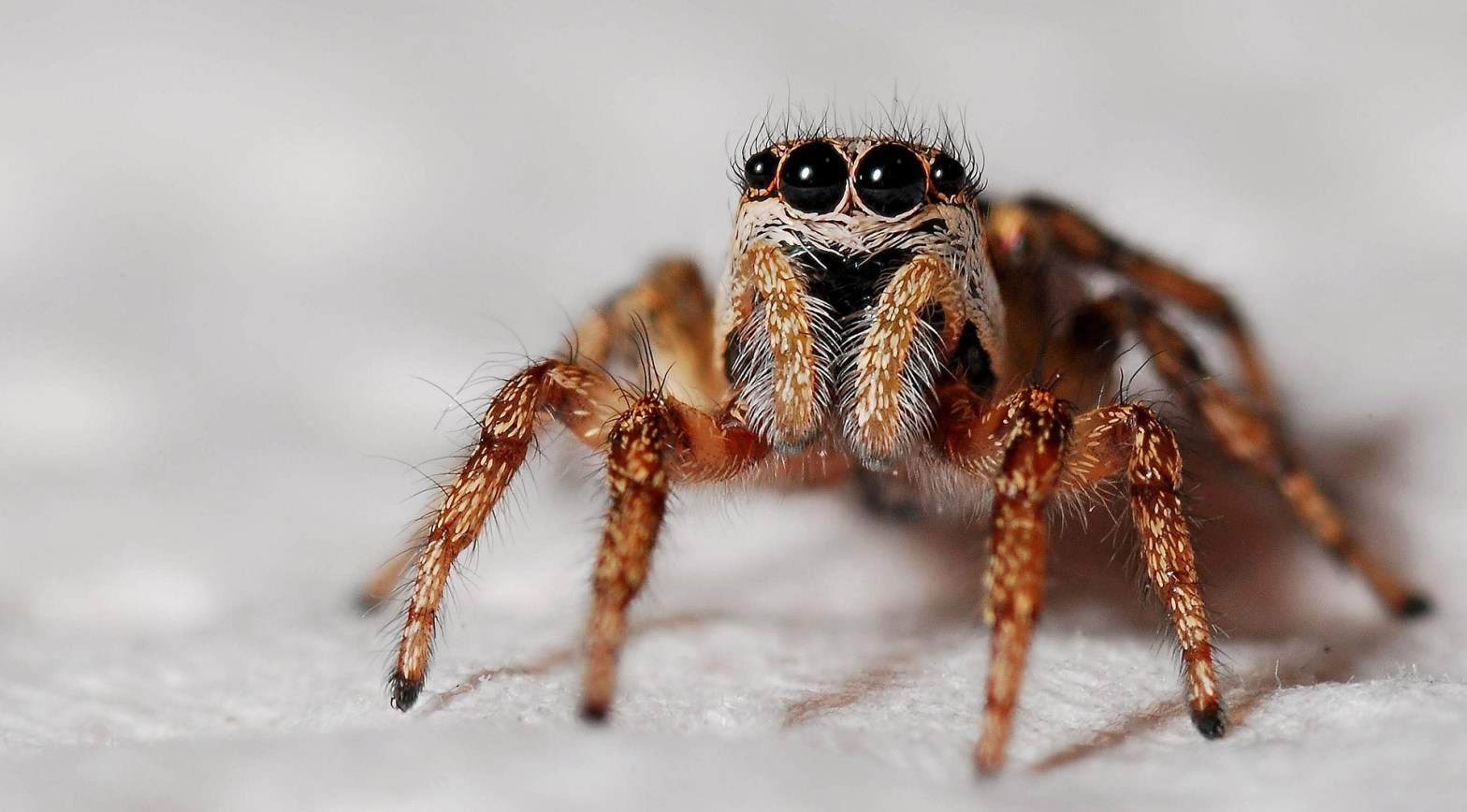
What makes someone want to squash a spider simply because it is in their bedroom? How do you get them not to do it? Command them? Threaten them? Lecture them?
Can you imagine David Attenborough killing a spider in his bedroom with his loafer?
If you thought the spider was beautiful, you might not kill it — we do not usually kill things we find beautiful, but beauty does not take us far enough. I can imagine someone appreciating the beauty of a national park while still being willing to build a shopping mall over it for financial gain.
We also have to care about something, and that does not depend on beauty. So how do you get someone to care for a spider?
Imagine you were in a cell in solitary confinement for ten years with nothing but a spider. You might not be so quick to kill it then. Instead of fear and disgust, you might start to feel curiosity and even connectedness. The spider might even become your friend over time. Look at how Tom Hanks became attached to a volleyball in the movie Cast Away.
The spider is alive; we are alive. There is mutual recognition from us to the spider and, I am sure, from the spider to us.
Being alive is not a concept. It is a subtle process of constant change, and, like the weather, we can be more or less sensitive to it, more or less tuned in to it.
I find watching Attenborough’s ‘Life on Earth’ to be an embodied experience. I cannot help but marvel and feel amazement at the delicacy, complexity, drama, and sheer fullness of life. It is the greatest show on Earth, and you are part of it.
Sensitivity comes through the body, but in response to the world we build layers of armour within ourselves that extend from the skin to the inner organs and tissues. Muscles become contracted, organs and nerves compressed, breath held, movement limited.
Bodies adapt to threats.
With these defended bodily patterns, we lose some of our ability to be sensitive, we can become overly rigid or numb.
In learning not to feel pain, all feelings become dampened.
In a time of environmental crisis, body therapists are not impotent. By liberating the natural processes of the body that allow it to grow and heal, the client becomes more able to be attuned to their environment and to feel part of it.
The real beauty of Biodynamic Therapy is that it does not just free you from restrictive patterns; it also connects you to what is liberated — what, in Biodynamic terms is referred to as the Life Force.
We tend to go to therapy because the world has hurt us, because the world has compelled us to adapt to its ways. That is an “outside in” starting point. But when a person begins to change and move more into contact with their personal Life Force, they also begin to change the world around them.
Sensitivity can alter our ethical orientation.
When feeling more connected to the world, we become a little less inclined to harm, and more inclined to protect or leave alone.
Leaving something alone is a form of respect, a way of recognising it is not our business to interfere.
Leave it alone. In Biodynamic practice there is the phrase, “let it grow.” It means not being too quick to step in, to intervene with the natural process of life. This is not a passive but an active attention. A knowing of the right moment to support and how much.
Therapy takes on an almost archetypal narrative. From the world which wounded us we retreat to therapy, the world we go back to is the same but we are changed. Softer perhaps, more receptive and in time this changes how we treat the world around us, even if it is just not killing a spider, -which seems a pretty big change to me!
 Biodynamic Body Psychotherapy